

What is Pneumatic Cylinder
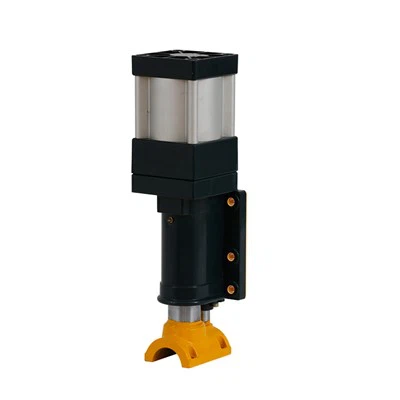
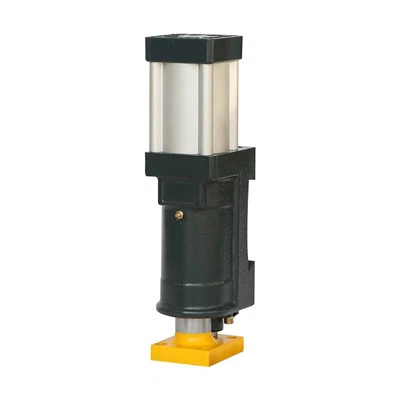
A pneumatic cylinder (or air cylinder) is a device that uses compressed air to generate force in a linear motion. It consists of a piston, a cylinder barrel, and a rod, and operates on the principle of pressure differentials. By harnessing the power of compressed air, pneumatic cylinders provide precise and controlled movement for various industrial applications.
Benefits of Pneumatic Cylinder
Compact structure and small footprint
The design of the cylinder enables it to work efficiently in a limited space, especially suitable for space-constrained application scenarios.
Can effectively save installation space
The compact design of the cylinder not only reduces the physical space occupied, but also simplifies the installation process and saves installation time.
Cheap price and beautiful appearance
Cylinders usually provide economical solutions, and their design is beautiful, suitable for occasions that require the appearance of the equipment.
Multiple installation methods
The cylinder can be fixed from multiple directions, providing flexible installation options to adapt to different work needs.
High guiding accuracy and strong load capacity
Some cylinder designs use cross ball guides, which have low friction, can achieve smooth movement without looseness, and have high guiding accuracy and strong load capacity.





Why Choose Us
Competitive prices
We offer our products at competitive prices, making them affordable for our customers. We believe that high-quality products should not come at a premium, and we strive to make our products accessible to all.
Rich experience
Has a long-standing reputation in the industry, which makes it stand out from its competitors. With over many years of experience, they have developed the skills necessary to meet their clients' needs.
Quality assurance
In terms of quality assurance, the company strictly follows the standards and norms of the industry quality system. Adopt industry-leading testing equipment to ensure product quality and good reputation.
High quality products
We always put customer needs and expectations in the first place, refine on, continuous improvement, to seek every opportunity to do better, to provide customers with their expectations of quality products, to provide customers with the most satisfactory service at anytime.
Advanced equipment
We take strong measures to ensure that we use the highest quality equipment in the industry and that our equipment is regularly and meticulously maintained.
Professional team
We have a team of skilled and experienced professionals who are well-versed in the latest technology and industry standards. Our team is dedicated to ensuring that our customers get the best service and support possible.
Types of Pneumatic Cylinder
Double-acting cylinder
A double-acting cylinder is a common type of cylinder in which the reciprocating motion of the piston is performed by compressed air. This type of cylinder alternately supplies air from both sides of the piston to output force in one or two directions. In a power cylinder with a single extended piston rod, since the right side of the piston has a larger area, when the air pressure acts on the right side, a slow and powerful working stroke is provided; during the return stroke, since the area on the left side of the piston is smaller, the speed is faster and the force becomes smaller. This type of cylinder is the most widely used, generally used in packaging machinery, food machinery, processing machinery and other equipment.
Single-acting cylinder
A single-acting cylinder is a hydraulic cylinder that works in only one direction. It has a piston rod at only one end. When compressed air enters from one side, the air pressure generated pushes the piston out, and the return of the piston depends on a spring or other mechanical force, such as deadweight or diaphragm tension. This type of cylinder is particularly suitable for applications with weight, gravity or other auxiliary forces, because these auxiliary forces will cause the hydraulic cylinder to move in a single direction. Compared with double-acting cylinders, single-acting cylinders are generally less expensive and perform well in a variety of mobile and industrial applications.
Rotary Cylinder
A rotary cylinder is a cylinder that converts linear motion into rotary motion. It is mainly composed of a piston, an output shaft, and an internal gear. When air pressure acts on the piston, the output shaft rotates clockwise or counterclockwise. Compared with linear actuators, rotary actuators produce circular motion and are often used in machines that require rotational motion. In addition, rotary cylinders are equipped with buffers to slow down the piston when it approaches the end of the stroke to prevent impact. The piston rod of this type of cylinder can stop at multiple positions along the length of the stroke and is often used in pneumatic chucks on machine tools.
Impact Cylinder
An impact cylinder is a cylinder that converts the energy of compressed air into the energy of high-speed piston motion. Its working principle is to use the high-speed piston motion generated by compressed gas to do work, and the maximum speed of the piston can reach more than 10m/s. Compared with ordinary cylinders of the same size, the impact energy of the impact cylinder is hundreds of times greater. This type of cylinder is divided into ordinary type and fast type. The structure includes three working chambers: piston rod chamber, piston chamber and energy storage chamber, and a middle cover with exhaust holes. It is widely used in various operations such as blanking, punching, crushing and forming.
Rodless cylinder
A rodless cylinder is a cylinder without a rigid piston rod, which directly or indirectly realizes reciprocating motion through the piston. This type of cylinder is divided into two types: mechanical coupling and magnetic coupling. Its biggest advantage is that it saves installation space, especially suitable for small cylinder diameter and long stroke. When using it, it should be noted that the middle slider cannot be fixed, and the front and rear seats at both ends must be fixed to avoid the cylinder being directly stressed and causing the cylinder barrel to bend, and a floating connecting rod should be used.
Swing cylinder
A swing cylinder is a pneumatic actuator that swings back and forth within an angle range of less than 360°, with the characteristics of small size, novel structure and good performance. It is mainly used for applications such as rotational motion, flipping, classification, fixture transfer and valve switching. Swing cylinders can be divided into vane type and gear rack type according to their structural characteristics. Among them, the vane type swing cylinder is divided into single-vane type and double-vane type, with the advantages of smallest size and lightest weight. The gear rack type swing cylinder has the characteristics of small size, novel structure and good performance.
Why Use a Pneumatic Cylinder
Before evaluating types and specs, the first step to choosing the right cylinder is to determine what fluid power source should be used–most commonly, pneumatic or hydraulic. Pneumatic power, which relies on pressurized gas, offers several advantages over hydraulic power. Air is a clean power source, which eliminates concerns regarding leaks in environments where a leak would cause major issues, such as sterile pharmaceutical production. Thanks to its low combustibility, air is also more suitable than hydraulic fluid for high-temperature operating conditions and in applications or surroundings where an electrical spark could ignite leaking fluid.
Consider using pneumatic systems instead of hydraulic systems where inertia is a concern. Hydraulic oil has greater inertia than gases do. When the application calls for fast acceleration and deceleration, and when something must be opened and closed quickly, the weight of the oil can be a problem. Hydraulic or oil systems have higher frictional pressure losses due to their relatively higher viscosity compared with the viscosity of air. Our hydraulic systems are designed to contain a reservoir that holds fluid and it is crucial that they are made to be leak-free. In pneumatic systems, the air is taken in from the surrounding atmosphere and exhausted back into the atmosphere. Because of this, the system can also be less costly. Air is a reliable, fast-moving, and inexpensive source of power.
Pneumatic systems have some limitations. Air is compressible, which makes it nearly impossible to achieve precise and controlled velocities of the actuator rod. This also means that accurate positioning is not easy to achieve. Air is limited to low pressures (about 250 PSI) due to the dangers of explosion if any of the components get ruptured. As a result, pneumatic systems are limited to low-power applications. Hydraulic systems can be as high as 10,000 PSI, sometimes even higher, making them suitable for high-power systems. The low viscosity of air, which helps to reduce the effects of inertia, can also be detrimental to the system. Air is a poor lubricant. By comparison, a hydraulic system does not need additional lubrication.
How A Pneumatic Cylinder Works
The most popular type of pneumatic cylinder is made up of a piston and rod, moving within a closed cylinder. There are two subcategories of this cylinder based on how they operate, namely, single acting and double acting.
Single-acting cylinders use one airport which allows compressed air to enter the cylinder, moving the piston to the desired position. A spring is used to return the piston to its original position once air pressure is removed. Double-acting cylinders, on the other hand, have an airport at each end to move the piston back and forth using alternating blasts of pressured air.
Typically within an application, the actuator body is connected to a support frame and the end of the rod is connected to a machine element that is to be moved. An on-off control valve directs compressed air into the port to be extended, while opening the port to be retracted to the atmosphere, creating a pressure difference within the cylinder which, if the load connected to the rod is less than the force created by the force of the pressure differential multiplied by the surface area of the piston, will move the load. The machine element position can be reversed by reversing the compressed airflow.
Pneumatic cylinders help to power other components, but they are rarely seen, unlike other components such as compressors, filters, pressure regulators, lubricators, on-off control valves, and flow controls. All of these components are connected together by a network of piping or tubing (either rigid or flexible), and fittings. It is crucial to take into account the pressure and flow requirements of the cylinders or actuators in an application system when selecting these other components, to ensure the desired performance.
Application of Pneumatic Cylinder
Industrial automation equipment
In production lines such as automobile manufacturing and electronic product assembly, cylinders are used to achieve various mechanical actions, such as opening and closing doors, carrying items, etc.
Engineering machinery
Cylinders are used in engineering vehicles such as excavators, forklifts, and loaders to achieve the actions of working devices, such as digging and lifting goods.
Aerospace field
Cylinders are used in engines and rudder control of aircraft and rockets.
Medical field
Some medical equipment such as ventilators and anesthesia machines also need cylinders.
Agricultural machinery
In agricultural machinery such as harvesters, cylinders are used to achieve various operations, such as opening/closing headers and adjusting harvesting heights.
Gas compression and storage
Cylinders are also used in gas compression and storage equipment, such as gas storage tanks and air pressure pumps. ere viverra
Boiler and heating systems
In boilers and heating systems, cylinders are used to control the supply of fuel and the entry of air to maintain a stable combustion process.
Sports equipment
In sports equipment such as golf carts and skateboards, cylinders are used to provide power and support the action of equipment.
Military equipment
In military equipment, cylinders are used to launch and operate weapon systems such as artillery and missiles.
Entertainment facilities
In some large amusement facilities such as Ferris wheels and roller coasters, cylinders are used to achieve various complex mechanical movements.
What Are The Structural Components Of The Cylinder
The piston is a part of the cylinder that is subjected to working pressure. To prevent mutual gas leakage between the left and right chambers of the piston, a piston sealing ring is equipped. The anti wear ring on the piston can improve the directionality of the cylinder, reduce the wear of the piston sealing ring, and reduce friction. The wear-resistant ring is made of raw materials such as polyurethane, polytetrafluoroethylene, and woven rubber tube anti-corrosion coating. The total width of the piston is determined by the flipped length of the sealing ring size and importance. The flipped part is too short, which can easily cause early damage and jamming. The materials of the piston are generally aluminum profiles and cast iron, and the pistons of small and medium-sized cylinders are made of red copper.
The diameter specification of the cylinder barrel represents the magnitude of the cylinder's output force. The piston needs to undergo stable reciprocating flipping inside the cylinder barrel, and the smoothness of the inner and outer surfaces of the cylinder barrel should reach Ra0 and 8um. For seamless cylinder barrels, the inner surface should also be plated with hard chromium to reduce friction and damage, and to avoid rusting. In addition to using medium carbon steel pipes, cylinder materials can also be made of high wear-resistant aluminum profiles and red copper. Small and medium-sized cylinders are made of stainless steel pipes. Cylinders with magnetic induction switches or cylinders used in corrosion-resistant natural environments should use materials such as stainless steel plates, aluminum profiles, or red copper for the cylinder barrel.
The end cover is equipped with inlet and exhaust pipe openings, and some are still equipped with cache organization inside the end cover. The rod end cover is equipped with a sealing ring and dust ring to prevent steam exposure from the piston rod and prevent external dust from seeping into the main cylinder. The rod end cover is equipped with a guide sleeve to improve the guidance accuracy of the cylinder, bear a slight transverse load on the piston rod, reduce the downward bending amount when the piston rod is extended, and increase the service life of the cylinder. The dominant set generally uses forged aluminum alloy with oil content and forward stretched copper castings. The end cover used to be generally malleable cast iron, but now it is often cast with aluminum alloy to alleviate net weight and prevent rust. Small cylinders are made of red copper material.
The airtightness of rotating or repeatedly moving components is called dynamic airtightness, and the airtightness of a portion of stationary components in place is called rotational sealing.
The piston rod is an important load-bearing component in the cylinder. Generally, medium carbon steel is used, and the surface is treated with hard chromium plating or stainless steel plate is used to resist corrosion and improve the wear resistance of the sealing ring.
Steps To Clean A Cylinder Head
Safety First
Don your PPE gear - safety glasses, gloves, and a respirator mask - to shield yourself from potential hazards during cleaning.
Disassemble
Remove the cylinder head from the engine block carefully. Check your car's repair manual for guidance if you need help with how to do this.
Pre-Cleaning Inspection
Assess the cylinder head for any significant damage. Look for cracks, warping, or signs of wear. The cylinder head may need professional attention or replacement if it is severely damaged.
Scrubbing off the Grime
Use a soft brush and a plastic scraper to gently remove the carbon buildup and grime from the cylinder head's surface. Avoid using metal scrapers, as they can damage the metal.
Soak it Up
Fill a container with a suitable engine degreaser and submerge the cylinder head. Allow it to soak for the recommended time to loosen up stubborn deposits.
Scrub Some More
After soaking, take the cylinder head out and give it another round of scrubbing with the brush and scraper to remove the softened grime effectively.
Rinse and Dry
Rinse the cylinder head thoroughly with clean water to wash away the degreaser and residue. Once clean, use clean rags to dry it.
Inspect Again
Check the cylinder head for any remnants of dirt or deposits. Repeat the cleaning process if needed until you achieve a clean surface.
Reassembly
With the cylinder head sparkling clean, it's time to reassemble it back onto the engine block, following proper torque specifications and gasket placement.
Test and Enjoy
Start your engine and revel in the renewed power and efficiency your freshly cleaned cylinder head brings.
Jiaxiao company develop and produce spot welder controller and spot welding machine since 1992, we're one of the biggest suppliers in China. Spot welders, MFDC welder, variable frequency AC welder, butt welders, seam welders, gun welders, 3 phase welders, micro welders, special application machines are offered here. Our products are widely used in electrical production, auto parts manufacturing, battery production, metal splicing and other fields. With advanced technology, excellent management philosophy, high-quality products, and constantly develop and grow, widely praised by the industry and users. Based on our professional engineer team, rich experience and latest technical, we specialize in fitting your welding requirements to the proper welding equipment.

Certifications


FAQ
We're professional pneumatic cylinder manufacturers and suppliers in China, specialized in providing high quality customized products. We warmly welcome you to buy high-grade pneumatic cylinder made in China here from our factory.