

What is Spot Welding Machine
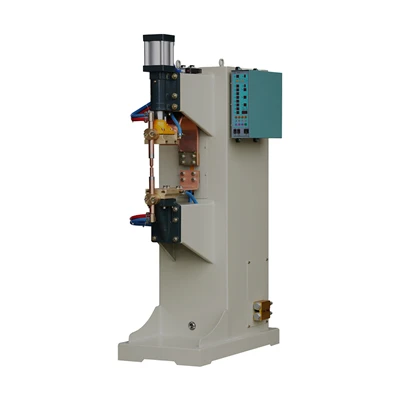
Spot Welding machines use a method called resistance spot welding to join overlapping metals between two electrodes using electrical resistance. Squeezing the workpieces between the electrodes applies pressure, and the passage of welding current through the resistive metals generates heat.
Benefits of Spot Welding Machine
Increased Productivity
One of the primary advantages of spot welding machines is that they can help to increase productivity. This is because spot welding machines can weld multiple pieces of metal together quickly and efficiently. Additionally, spot welding machines can be used to weld various metals together, which can further increase productivity
Reduced Costs
Another advantage of spot welding machines is that they can help to reduce costs. This is because spot welding machines are very efficient and use less energy than other welding machines. Additionally, spot welding machines generate less waste than other types of welding machines, which can further reduce costs.
Increased Safety
Spot welding machines can also help to increase safety in the workplace. This is because spot welding machines are less likely to cause injuries than other types of welding machines. Additionally, spot welding machines emit less fumes and smoke than other types of welding machines, which can further improve safety in the workplace
Improved Quality
Spot welding machines can also help to improve the quality of welds. This is because spot welding machines create stronger and more reliable welds than other types of welding machines. Additionally, spot welding machines are less likely to damage the welded materials, which can further improve the quality of welds.




Why Choose Us
Competitive prices
We offer our products at competitive prices, making them affordable for our customers. We believe that high-quality products should not come at a premium, and we strive to make our products accessible to all.
Rich experience
Has a long-standing reputation in the industry, which makes it stand out from its competitors. With over many years of experience, they have developed the skills necessary to meet their clients' needs.
Quality assurance
In terms of quality assurance, the company strictly follows the standards and norms of the industry quality system. Adopt industry-leading testing equipment to ensure product quality and good reputation.
High quality products
We always put customer needs and expectations in the first place, refine on, continuous improvement, to seek every opportunity to do better, to provide customers with their expectations of quality products, to provide customers with the most satisfactory service at anytime.
Advanced equipment
We take strong measures to ensure that we use the highest quality equipment in the industry and that our equipment is regularly and meticulously maintained.
Professional team
We have a team of skilled and experienced professionals who are well-versed in the latest technology and industry standards. Our team is dedicated to ensuring that our customers get the best service and support possible.
Various Types of Spot Welding Machine


Resistance spot welding machine
This is the most common type of spot welding machine, which uses resistance heat generated by the electrical current through the metal parts to create a weld. This type of machine is ideal for joining thin sheets of aluminum or steel, and it is used widely in automotive and aircraft manufacturing.
Seam welding machine
This machine is designed for welding long, continuous seams in metal sheets or tubes. It uses a wheel or electrode to apply heat and pressure along the seam, creating a watertight joint. Seam welding machines are often used in the production of fuel tanks, oil filters, and other cylindrical shapes.
Projection welding machine
This type of machine is used for welding studs, nuts, or other small components to a metal surface. It works by applying pressure to the component, creating a high level of resistance, and generating heat to fuse the components together. This type of machine is commonly used in the automotive and construction industries.
Portable spot welding machine
As the name suggests, this machine is compact and portable, making it ideal for onsite repairs and maintenance. It is perfect for welding small metal components, and it can be used in the automotive, HVAC, and construction industries.
Inverter spot welding machine
This type of machine uses an inverter to regulate the electrical current, making it more efficient and precise. It is ideal for welding thin metals like aluminum and stainless steel, and it is commonly used in the electronics, aerospace, and medical industries.
Resistance Spot Welding Machines Market was valued at USD 1.09 billion in 2023 and is expected to reach USD 3.06 billion by the end of 2030 with a CAGR of 7.1% During the Forecast Period 2024-2030.
With resistance welding technology being used to join metal components, the Resistance Spot Welding Machines Market is a crucial subset of the larger welding machinery industry. This market is essential to many different manufacturing industries, including electronics, construction, automotive, and aerospace. Resistance spot welding is a well-known metal fabrication technique that combines pressure and electrical current to produce localized heat that melts and fuses metal surfaces to produce a strong, long-lasting bond.
Resistance spot welding is changing rapidly, and two major factors influencing this change are cost-effectiveness and environmental sustainability. Eco-friendly welding techniques are becoming more and more popular in the market, with an emphasis on energy efficiency and the use of sustainable materials. In order to comply with international sustainability goals, manufacturers are progressively implementing cutting-edge materials and consumables, such as high-strength and low-carbon steels.
The market for resistance spot welding machines is also impacted by the changing regulatory environment, which sets strict guidelines for industry practices in terms of quality and safety. In order to meet the demands of both regulatory compliance and customer expectations, manufacturers are proactively adapting to these standards by incorporating safety features and quality control mechanisms into their machines.
What Are the Fields Where Spot Welding Machines Can Be Used

Automobile manufacturing industry
Cars are convenient tools for daily travel, and the need for safe use also gives precision spot welding machines greater expectations. Everyone knows that in addition to the large body of a car, there are many small accessories inside. As long as these involve the splicing of different materials or parts, they all need to be reinforced by welding, and this process also requires instant completion without delay to ensure that the welding points are more stable and the processing effect is more beautiful.

Home appliance manufacturing industry
In the process of home appliance manufacturing, precision spot welding machines may be used for various styles of products. Especially when connecting some combined parts, the smaller joints need to be connected as well as possible, but for the sake of beauty, you don’t want to leave too many processing traces, so at this time, using tools with a high level of precision can achieve this goal well and achieve a stable output effect.

Hardware casting industry
I believe that everyone has a certain understanding of this industry. Even if you don’t know much about the processing process and mode of large factories, people who have bought materials and parts at hardware stores know that hardware covers a very wide range. Many finished products related to metal materials basically need to be welded. The commonly used processing equipment in the hardware casting industry is spot welding machines. Modern precision spot welding machines have been systematically improved and integrated with the needs of environmental protection.
How Much Voltage Required for Spot Welding Machines
Common settings for spot welding machines are 5 to 22 volts and 1000 to 10,000 amperes. Spot welding equipment designed for industrial usage often require three-phase electricity due to the large peak currents they require. In particular, it is employed for spot welding aluminum sheets used in boilers and tubes. AC electricity is typically used to power spot welders. High currents at low voltages are possible with AC power thanks to the use of a transformer. Spot welding equipment consists of a power transformer, welding electrodes, and other parts that allow for regulation of weld current, pressure, voltage, and so on.
Key Components of Spot Welding Machines
Types and Materials: Electrodes in spot welding machines are typically made from copper or copper alloys due to their excellent electrical conductivity and heat resistance. There are various types of electrodes, including flat, dome, pointed, and offset, each designed for specific welding applications and material thicknesses.
Maintenance: Regular maintenance of electrodes is crucial for consistent welding quality. This includes cleaning, reshaping, and occasionally replacing worn electrodes. Proper alignment and ensuring a clean contact surface are also essential for optimal performance.
Role: The transformer in a spot welding machine is responsible for converting the high-voltage, low-current power supply into a low-voltage, high-current output suitable for welding. This transformation is crucial for generating the heat needed to weld materials.
Types: There are several types of transformers used in spot welding machines, including single-phase AC, three-phase AC, and DC transformers. The choice depends on the specific requirements of the welding application, such as the material type and thickness.
Functionality: The controller is the brain of the spot welding machine. It regulates the welding current, time, and pressure, ensuring that each weld is consistent with the pre-set parameters. This is crucial for achieving uniform weld quality across multiple welds.
Types: Controllers range from simple timer-based systems to sophisticated microprocessor-based controls. Advanced controllers offer features like programmable welding cycles, feedback systems, and integration with automation systems for precise control over the welding process.
Importance: The cooling system in a spot welding machine is essential for dissipating the heat generated during the welding process. It prevents overheating of the electrodes and the transformer, which can lead to equipment damage and reduced weld quality.
Types: Cooling systems can be air-cooled or water-cooled. Air-cooled systems are typically used in lower-duty applications, while water-cooled systems are preferred for high-duty cycles and industrial applications due to their superior cooling efficiency.
Selection Tips for Spot Welders
Weld Thickness
When choosing a spot welder, it is crucial to consider the thickness of the weld. Checking the specifications of the welder can help to understand whether it is better suited for thin or thick metals.
The thickness of the weld affects the current, voltage, and time that the spot welder needs to properly weld two pieces of metal. Spot welders with less power output are good for welding thin metals, while those with too much power output are good for welding thicker metals.
Users should be careful to only purchase a spot welder that is compatible with the thickness of the welded metal. Choosing an incompatible welder may produce a poor quality welding arc or damage the metal material.
Power Output
The power output of a spot welder determines the thickness of the material it can weld. A higher power output will allow for the welding of thicker materials, while a lower power output will only allow for the welding of thinner materials.
It is also important to consider the type of welded material, as some materials may require a higher power output than others. Additionally, a higher power output helps ensure a high-quality weld and reduces the risk of welding errors. Choosing a spot welder with the appropriate power output is essential to help consumers achieve high-quality welds.
Temperature Range
When choosing a welder, it is important to consider the temperature range of the type of metal being welded. For example, welding strong metals such as titanium requires a welder with a higher temperature range. Conversely, welders with lower temperature ranges are suitable for welding softer metals such as stainless steel. In addition, users should also consider the size and shape of the metal to ensure that the heat is evenly distributed when welding.
Power Source
The type of power source used determines the size and capacity of the spot welder to purchase. Machines powered by high-ampere power sources will have a stronger welding current and therefore a higher ability to weld thicker materials. On the other hand, machines powered by low-ampere power sources will have a lower welding current and may not be suitable for welding thicker materials.
The power source will also affect the size and weight of the machine. For example, machines powered by high-power power sources are larger, while machines powered by low-power power sources are smaller. The type of power source will also determine the cost of the machine and its maintenance. Spot welders that consume high power have higher initial costs and maintenance costs than machines that use low-ampere power sources.
Control Options
When purchasing a spot welder, there are a few control options to consider. First, determine whether the user wants a manual, semi-automatic, or automatic spot welder. Manual spot welders require the user to manually initiate the welding process, while semi-automatic and automatic welders can be programmed to weld without direct user input.
Consider the type of control interface. Manual welders typically have toggle switches or buttons, while semi-automatic and automatic welders may use a foot pedal, digital display, or programmable controller.
Buyers should check if the welder offers current and voltage control features. Spot welders can be purchased with preset current and voltage settings or with adjustable settings so that the user can modify the current and voltage as needed.
Safety feature controls on the welder are crucial. A quality spot welder will have various safety features such as thermal cut-off, low voltage protection, and overload protection. All of these factors make it easy to find a spot welder that provides reliable service.
Suitable Materials
When buying a spot welder, it is crucial to consider the relevant materials before purchasing. Different spot welders are designed for different materials, and choosing the wrong type of welder may result in poor quality or even complete failure of the welded joint. For example, a spot welder designed for mild steel is not suitable for welding silver or magnesium.
Jiaxiao company develop and produce spot welder controller and spot welding machine since 1992, we're one of the biggest suppliers in China. Spot welders, MFDC welder, variable frequency AC welder, butt welders, seam welders, gun welders, 3 phase welders, micro welders, special application machines are offered here. Our products are widely used in electrical production, auto parts manufacturing, battery production, metal splicing and other fields. With advanced technology, excellent management philosophy, high-quality products, and constantly develop and grow, widely praised by the industry and users. Based on our professional engineer team, rich experience and latest technical, we specialize in fitting your welding requirements to the proper welding equipment.

Certifications


FAQ
We're professional spot welding machine manufacturers and suppliers in China, specialized in providing high quality customized products. We warmly welcome you to buy high-grade spot welding machine made in China here from our factory.